

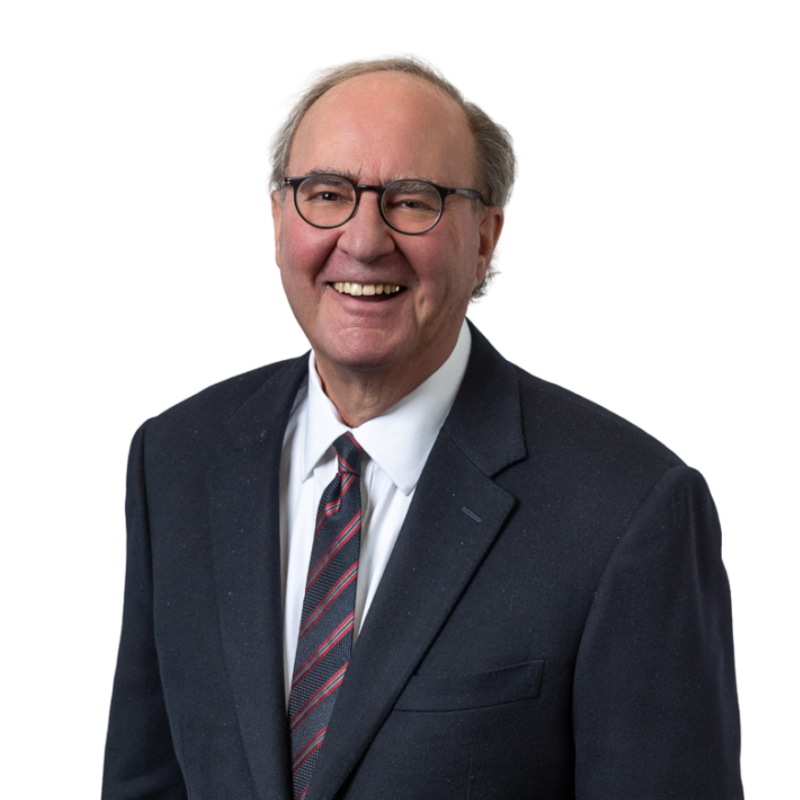
In remembrance of Stephen H. Kaplan
Stephen H. Kaplan passed away on Sunday, November 1, after a long illness. He was 79. He was a nationally recognized lawyer, public servant, and civic leader whose career helped shape Denver’s modern transportation and urban landscape. A founding partner at Kaplan Kirsch LLP, he concentrated his practice on public-private partnerships, major real estate and infrastructure development, land use, airports, and passenger rail. His work was distinguished by an ability to bring together governmental bodies, private developers, public agencies, and financing institutions to accomplish complex civic projects.
Before entering private practice, Kaplan held senior positions at the municipal, state, and federal levels. He served as an Assistant and First Assistant Attorney General of Colorado from 1976 to 1981 and as Denver City Attorney from 1983 to 1990. During seven years as City Attorney, he was closely involved in the negotiations that led to the development of Denver International Airport and the Colorado Convention Center, as well as the governance and financing structure for Denver’s Major League Baseball stadium.
From 1993 through 1995, Kaplan served as General Counsel of the United States Department of Transportation. He advised and represented the Department and its agencies, including the Federal Aviation Administration, Federal Transit Administration, Federal Highway Administration, and Federal Railroad Administration. His responsibilities encompassed issues ranging from airport revenue and privatization to regulatory reform and federal environmental policy. He also participated in the negotiation of the United States-Canada aviation agreement signed in February 1995.
He founded Kaplan Kirsch & Rockwell (now Kaplan Kirsch LLP) in 2003 with five other partners. In private practice, Kaplan became particularly identified with the redevelopment of major publicly owned properties and the structuring of public-private partnerships. He represented the master developer in the redevelopment of the former Stapleton International Airport, now Central Park, a project involving approximately 3,000 acres and more than $650 million in publicly financed infrastructure. His work on the project extended over more than two decades and included federal regulatory requirements, infrastructure financing, brownfields issues, land use, and real estate.
Kaplan’s other significant transportation and development work included representing the Regional Transportation District in the procurement and implementation of the Eagle P3 commuter-rail project serving Denver International Airport; representing the master developer of the Denver Union Station site, where multiple funding sources were assembled to construct transit and rail infrastructure; and representing the Front Range Passenger Rail District in its efforts to develop passenger-rail service along Colorado’s Front Range. He also advised airports on commercial development, on privatization efforts, and other projects involving both public and private interests around the country.
Kaplan was active in civic and charitable organizations throughout his career. His service included membership on the Board of Directors and a term as president of the Colorado I Have a Dream Foundation; chairing the Denver Public Schools Citizens’ Bond Committee in 2003; serving as Vice-Chair of the National Civil Aviation Review Commission, commonly known as the Mineta Commission, in 1997; and serving on the boards of the Denver Zoo, Children’s Museum, and SafeHouse. He also co-chaired Denver’s Zoning Code Task Force. At the time of his passing, he was a member of the Board of Directors of Conservation Colorado.
His professional achievements received sustained recognition. Kaplan received the Federal Aviation Administration’s Award for Extraordinary Achievement in 1995 and the Airports Council International Award for Outstanding Leadership in 1996. He was recognized in The Best Lawyers in America beginning in 2007. He was named Denver “Lawyer of the Year” for Land Use and Zoning Law and for Real Estate Law in multiple years. The 2027 edition again recognized him in both Land Use and Zoning Law and Real Estate Law. Chambers USA ranked him in Band 1 for Colorado Real Estate: Zoning/Land Use in 2026.
Kaplan graduated cum laude from Harvard College in 1969 and received his J.D. from Harvard Law School in 1973. He was admitted to practice in Oklahoma in 1973 and Colorado in 1976.
Through his government service and private practice, Kaplan helped establish the legal, financial, and governmental frameworks for projects that changed Denver and influenced transportation and urban redevelopment nationally. His legacy is reflected not only in the airports, rail systems, neighborhoods, civic institutions, and public facilities he helped bring into being, but also in the collaborative and pragmatic approach he brought to the most difficult public projects. He was the central force in building the law firm from a startup of 6 partners to more than 60 lawyers with offices coast-to-coast. Under his leadership, the Firm has become one of the nation’s preeminent firms representing clients in public projects and private investment in redevelopment and tribal projects.
He is survived by his son, Michael, daughter-in-law, Alexandra Woods, daughter Leslie, son-in-law Joe Heitkamp, and four grandchildren, Sammy and Sophie Heitkamp, Morris and Zev Kaplan, all of whom live in Denver. His wife of 48 years, Jeannie, passed away in 2023.
Contributions in memory of Steve Kaplan can be made to the Stephen Kaplan Memorial Fund at the Denver Foundation: https://denver.fcsuite.com/erp/donate/create/fund?funit_id=1826